Microsoft's Suleyman details roadmap for medical superintelligence
Microsoft AI's CEO outlines plans to integrate an AI diagnostic tool into hospitals, building on a recent study showing its ability to outperform human physicians on complex cases.
By Ananya Gupta ·
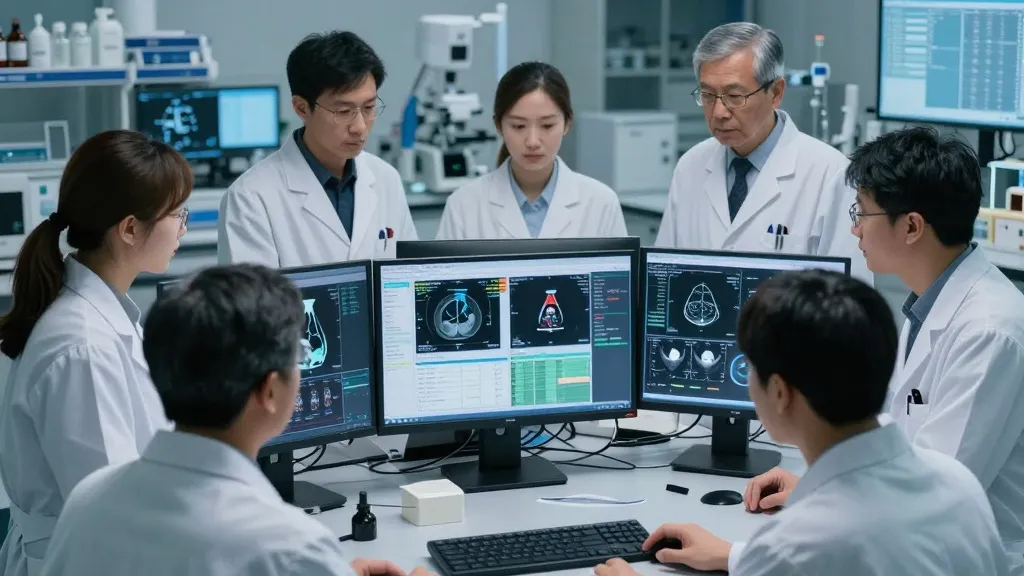
The path to AI-driven healthcare is clear to Mustafa Suleyman. A recent study published in the journal Science on Thursday, October 22, provides Microsoft with data to support its claims of progress. The study found that Microsoft's AI diagnostic system correctly identified complex medical cases in a simulation more than twice as often as generalist physicians. The system is designed to act like a panel of doctors, questioning a patient, ordering tests, and debating a diagnosis.
The timeline for this technology's development is now being outlined by Microsoft. The company's CEO, Mustafa Suleyman, described the result as a step toward "medical superintelligence." He previously co-founded DeepMind, which was acquired by Google in 2014, and later launched DeepMind Health with Dominic King, who is now vice president of Health at Microsoft AI. Suleyman joined Microsoft to lead its AI unit in 2024, and King followed a few months later. In the study's simulation using complex cases from the New England Journal of Medicine, Microsoft's system was correct 83% of the time, while primary care doctors and general internists were correct 36% of the time.
Microsoft's own data provides a more detailed picture of the system's capabilities. The system's orchestration of multiple AI agents provides gains on top of what the underlying models can do alone. For example, with OpenAI's GPT-5 on its own, the accuracy on complex cases was 78.9% at a cost of about $8,400 per case. Microsoft's system cut that cost by about $3,000 and raised accuracy by about four points. However, the gains from the system were not uniform. On emergency department cases, there was little improvement in either accuracy or cost between GPT-5 on its own and with the system's assistance. Microsoft's researchers said that accuracy gains naturally shrink as models approach the theoretical maximum.
The next phase involves real-world evaluations. Suleyman said the company is working with the Mayo Clinic to train a foundation model for healthcare, with a release planned for next year. He believes this model will enable the company to "make really enormous leaps here," and says the diagnostic system is part of the foundational infrastructure Microsoft is building to see real breakthroughs in healthcare. Through a new partnership with Beth Israel Deaconess Medical Center in Boston, Microsoft will evaluate the system's clinical reasoning capabilities across different hospital settings. Patients will receive standard treatment, while those who consent will also engage with the system in parallel. Microsoft and its partners will compare its recommendations against the human doctors'.
Suleyman said he believes that in 2027, "we will be on the verge of a coding style breakthrough for medical records," and that the company will be able to stream highly accurate predictions about how a medical record might unfold. He expects healthcare models to get "an order of magnitude better in capability within the next 24 to 36 months." The company is positioning itself to provide this technology to clinicians and healthcare systems. "We have to have the absolute number one state-of-the-art medical clinical decision support products over the next few years," Suleyman said.
Source: TechCrunch