Tesla Constructs Proprietary Map Layer to Correct FSD Navigation Errors
The automaker is leveraging its fleet to build an internal mapping system after acknowledging that external data sources fail to reliably identify speed limits and parking zones.
By Kateryna Melnyk ·
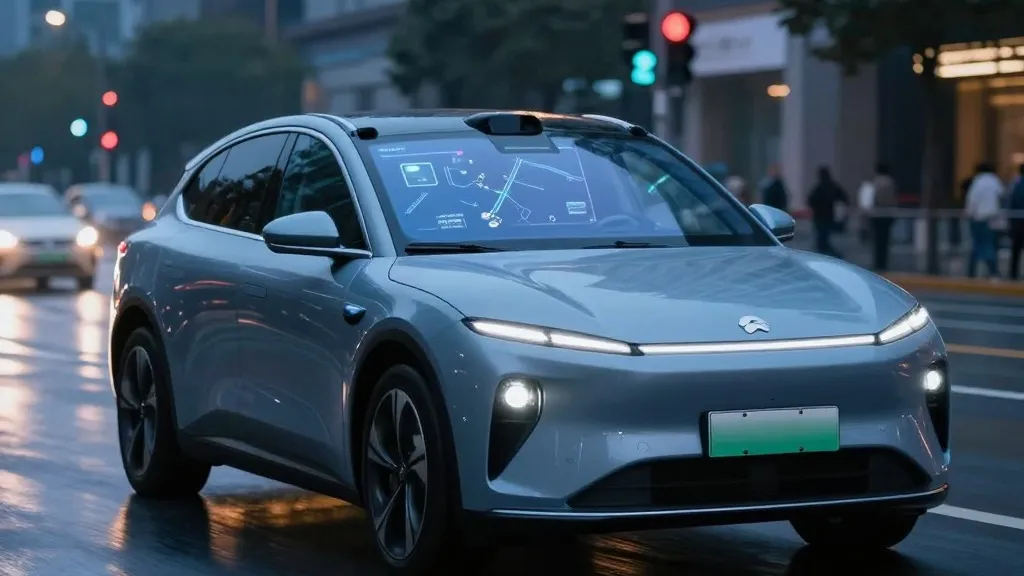
Tesla has confirmed it is developing an internal mapping architecture to address persistent failures in its Full Self-Driving software, a strategic pivot that contradicts the company’s long-standing public stance against reliance on external cartographic data. The announcement, made during the Q3 2026 earnings call, highlights a move to reduce dependency on third-party providers for critical navigation functions such as route selection and parking identification.
Ashok Elluswamy, Tesla’s VP of AI, outlined the initiative in response to shareholder concerns regarding the system's inability to consistently interpret environmental cues. He stated that the new AI-based system will be fed by collective fleet data, allowing it to learn individual driver preferences and respond to voice commands. The technology is scheduled to debut in FSD version 15, initially managing trip start and end points before expanding to handle full navigation and destination logic over the coming months.
This development marks a significant departure from the methodology promoted by CEO Elon Musk, who previously characterized high-precision maps as a source of brittleness in autonomous driving systems. In 2019, Musk dismissed the use of detailed lane maps and lidar as a "fool’s errand," arguing that vision-based AI alone could solve driving challenges without the overhead of maintaining static map data. The current strategy suggests that the earlier vision-only approach was insufficient for reliably processing basic road information.
The need for a proprietary map layer is driven by specific operational deficiencies, most notably the system’s frequent misreading of speed limit signs. Recent independent tests in Brussels found that FSD exceeded speed limits in more than half of the zones tested, often because the vehicle displayed an incorrect limit on its dashboard. In the United States, the National Highway Traffic Safety Administration is considering an investigation into similar speeding incidents in school zones involving Tesla’s Robotaxi fleet.
By utilizing its existing vehicle fleet to collect and refine mapping data, Tesla is adopting a model structurally similar to that used by its competitor Waymo. While Waymo employs lidar-equipped vehicles to create high-definition maps prior to service launch, Tesla’s approach relies on the cumulative observations of its consumer fleet to build a dynamic map layer. This method aligns with Tesla’s current Robotaxi operations, which function within geofenced areas rather than open-road environments, further narrowing the technical gap between the two autonomous driving strategies.
The shift implies that Tesla’s fleet is now serving a dual purpose, acting both as a data collection platform and a consumer product. This move may influence the timeline for unsupervised FSD deployment in consumer vehicles, which is currently targeted for Q2 2027. As the company integrates this new map layer, the market will likely scrutinize whether this internal infrastructure provides a competitive advantage or simply corrects the foundational errors that have plagued the system for years.
Source: Electrek